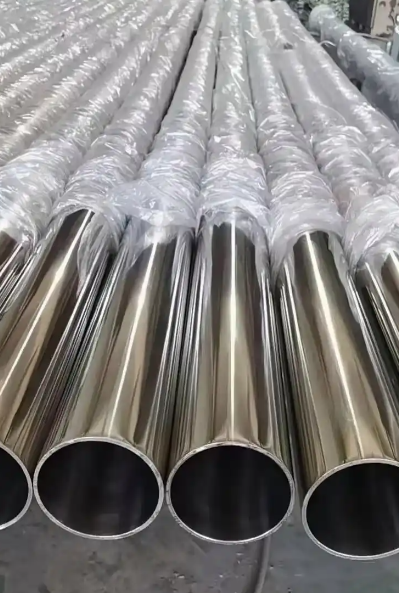
304L Stainless Steel Pipe
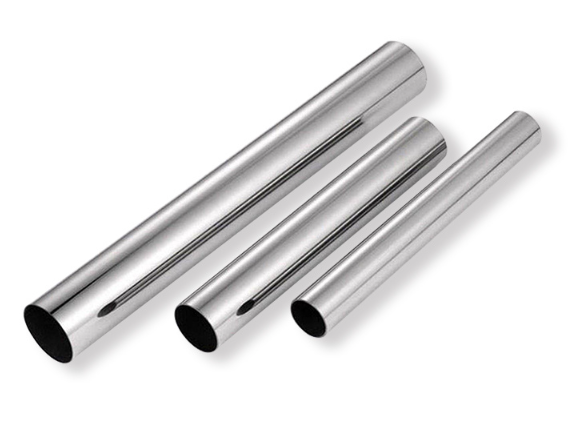
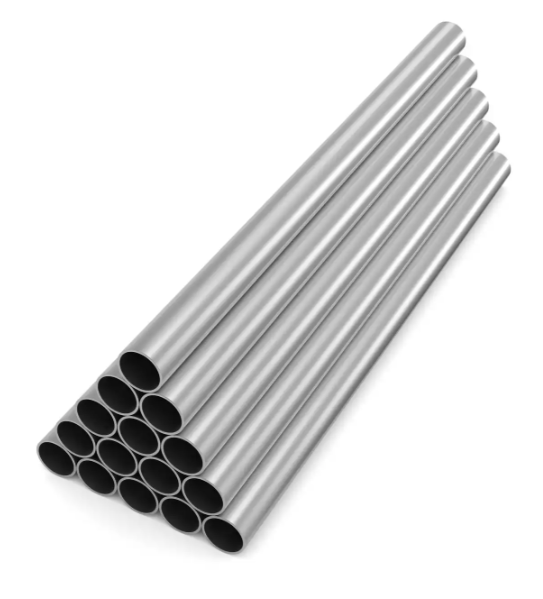
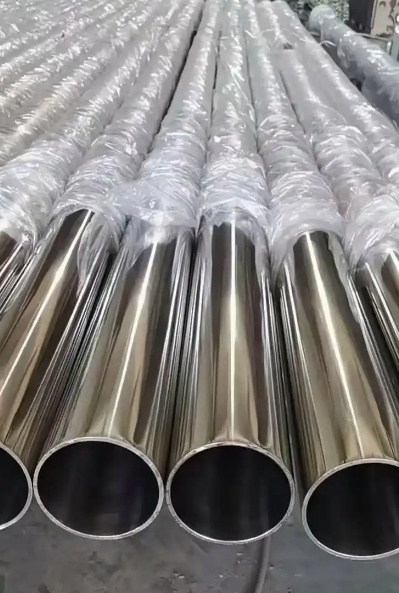
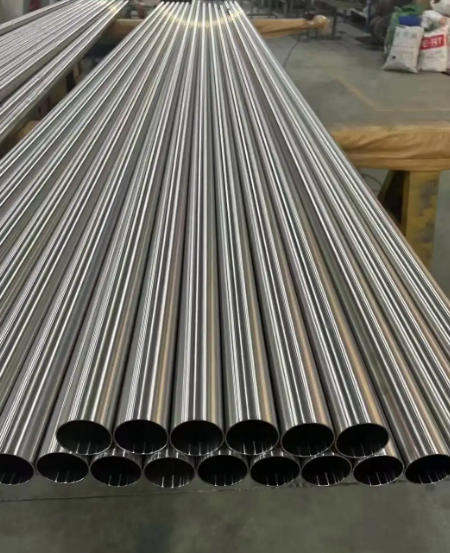
The 304L Stainless Steel Pipe is a low-carbon variant of the industry-standard 304 austenitic stainless steel. Renowned for its exceptional corrosion resistance and versatility, the "L" grade specifically denotes a maximum carbon content of 0.03%, which significantly enhances its suitability for welding and high-temperature service. This pipe is a cornerstone material in industries ranging from chemical processing to food production, where hygiene and durability are paramount.
Material Properties & Chemical Composition
The outstanding performance of 304L pipe stems from its balanced chemical composition. The addition of chromium (18-20%) forms a passive oxide layer on the surface, providing self-healing corrosion protection, while nickel (8-12%) stabilizes the austenitic structure, ensuring toughness even at cryogenic temperatures. The controlled low carbon content is the defining feature, preventing the formation of chromium carbides at grain boundaries during welding. This makes 304L the preferred choice over standard 304 when post-weld annealing is impractical.
Manufacturing Process
304L stainless steel pipes are typically produced through two primary methods:
Seamless Process: Begins with a solid stainless steel billet that is heated and pierced to form a hollow shell. This shell is then rolled over a mandrel to achieve the desired outer diameter and wall thickness. The seamless nature ensures uniform strength and excellent pressure resistance.
Welded Process: Involves rolling a flat strip of 304L stainless steel into a tube and welding the longitudinal seam using TIG (Tungsten Inert Gas) or laser welding. The low-carbon chemistry of 304L allows for excellent weldability without compromising the corrosion resistance of the heat-affected zone.
Both processes conclude with solution annealing (quenching) to restore the fully austenitic microstructure and pickling/passivation to maximize corrosion resistance.
Key Features & Advantages
Superior Corrosion Resistance: Exhibits excellent resistance to a wide range of atmospheric, chemical, and food media, including nitric acid and most organic acids.
Excellent Weldability: The low carbon content virtually eliminates carbide precipitation during welding, allowing for fabrication without the need for post-weld heat treatment.
High Ductility & Toughness: Maintains high impact strength and elongation, making it easy to bend, cut, and form into complex shapes.
Hygienic Surface: Naturally non-porous and easy to sanitize, meeting the strict requirements of sanitary applications.
Temperature Resistance: Performs reliably in both cryogenic environments (down to -425°F / -254°C) and moderately high-temperature service.
Common Standards & Specifications
To ensure quality and interchangeability, 304L pipes are manufactured according to globally recognized standards:
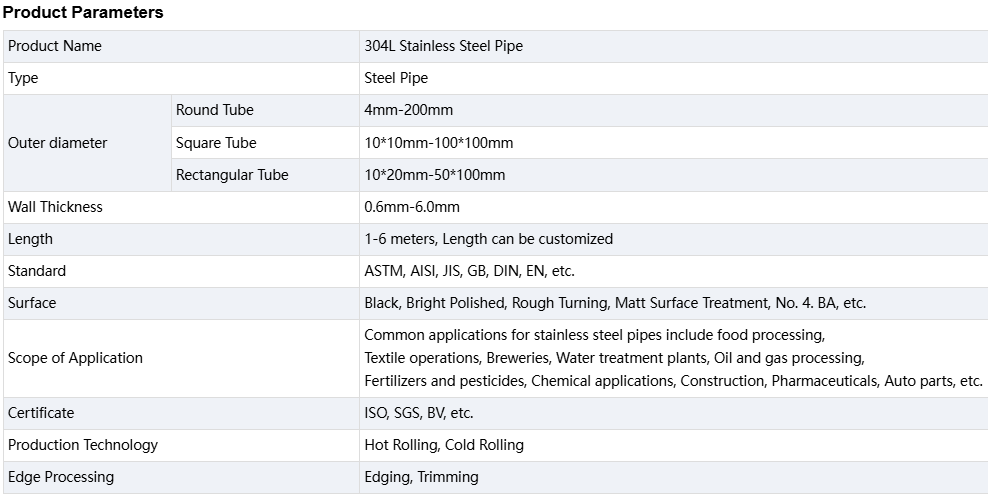
ASTM A312: Standard Specification for Seamless, Welded, and Heavily Cold Worked Austenitic Stainless Steel Pipes.
ASTM A213: Standard Specification for Seamless Ferritic and Austenitic Alloy-Steel Boiler, Superheater, and Heat-Exchanger Tubes (for heat exchanger tubes).
EN 10216-5: Seamless steel tubes for pressure purposes - Technical delivery conditions - Part 5: Stainless steel tubes.
Common Steel Names: UNS S30403, EN 1.4307, JIS SUS 304L.
Primary Applications
The versatility of 304L pipe allows it to be deployed across diverse sectors:
Food & Beverage Industry: Processing equipment, storage tanks, and piping systems where sanitation is critical.
Chemical & Petrochemical: Transporting corrosive chemicals, acids, and solvents in processing plants.
Pharmaceutical: Hygienic piping for ultra-pure water systems and process fluids.
Architecture & Construction: Handrails, exterior cladding, and structural supports in coastal or corrosive environments.
Heat Exchangers: Tubing for condensers and boilers due to its thermal conductivity and corrosion resistance.
Conclusion
The 304L Stainless Steel Pipe is an indispensable material for any application demanding a combination of corrosion resistance, fabricability, and cost-efficiency. Its low-carbon advantage solves the common welding problems associated with standard 304, making it the logical and reliable choice for modern industrial fabrication and infrastructure projects worldwide.
Previous:no more
Next:305 Stainless Steel Pipe
