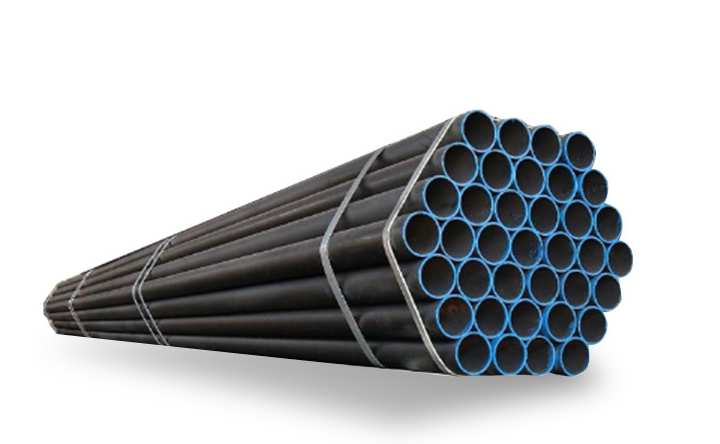
EN 10210/S355 Seamless Steel Pipe
EN 10210 S355 Seamless Steel Hollow Sections
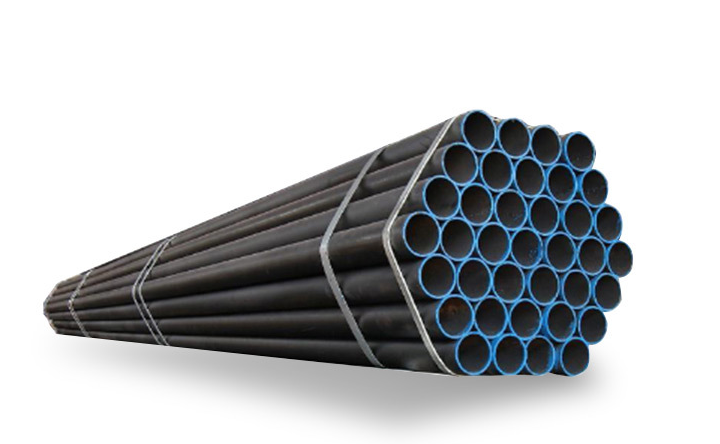
EN 10210 is a European standard that specifies the technical delivery conditions for hot finished hollow sections of non-alloy and fine grain steels. Within this standard, the S355 grade family represents the most widely used high-strength structural steel hollow sections, offering an optimal balance of strength, weldability, and formability for demanding construction and engineering applications.
Scope and Grade Designation
The EN 10210 standard encompasses both non-alloy structural steels and fine grain structural steels intended for load-bearing purposes. The S355 designation indicates a minimum yield strength of 355 megapascals. The standard further subdivides S355 into several sub-grades based on impact toughness requirements at different temperatures: S355J0 requires a minimum impact energy of 27 joules at zero degrees Celsius; S355J2 demands the same energy absorption at minus twenty degrees Celsius; and S355K2 extends this toughness requirement to minus twenty degrees Celsius with longitudinal test specimens. Additionally, fine grain variants such as S355NH and S355NLH are available for enhanced weldability and low-temperature performance.
Key Characteristics
The hot finished manufacturing process distinguishes EN 10210 hollow sections from cold-formed alternatives. During hot finishing, the steel is formed at elevated temperatures, which preserves the original grain structure and mechanical properties of the feed material. This results in more uniform mechanical properties throughout the section, reduced residual stresses, and improved dimensional stability compared to cold-formed products. The seamless variant, though less common in hollow sections than welded construction, provides superior pressure resistance and eliminates the potential for seam-related defects in critical structural joints.
S355 steel exhibits excellent weldability due to its controlled carbon equivalent value, typically limited to 0.47 percent or lower depending on the specific sub-grade. This characteristic enables efficient fabrication using conventional arc welding processes without extensive preheating requirements under normal conditions. The steel also demonstrates good cold bending properties, allowing profiled sections to be formed for architectural and structural applications. Surface quality is carefully controlled, with tolerances defined for corner radii, wall thickness variation, and straightness to ensure consistent fit-up during assembly.
Mechanical Properties
The mechanical performance of S355 hollow sections is characterized by a minimum yield strength of 355 megapascals and a tensile strength ranging from 470 to 630 megapascals. Elongation at fracture exceeds 20 percent for most thickness ranges, ensuring adequate ductility for structural safety. The fine grain variants achieve these properties through controlled rolling or normalizing processes that refine the austenite grain size, simultaneously improving toughness and weldability.
Applications
EN 10210 S355 seamless and welded hollow sections serve as primary structural elements across numerous sectors. In building construction, they function as columns, beams, and truss members where high strength-to-weight ratios reduce overall structural mass and foundation loads. Bridge engineering utilizes these sections for piers, deck supports, and arch structures exposed to dynamic loading and atmospheric corrosion. The offshore industry employs S355 hollow sections in platform jackets, subsea structures, and wind turbine towers where fatigue resistance and dimensional accuracy are paramount. Mechanical engineering applications include crane booms, agricultural equipment frames, and conveyor systems requiring robust yet lightweight structural tubing.
Quality Assurance and Testing
Compliance with EN 10210 requires comprehensive verification of both chemical composition and mechanical properties. Mandatory tests include tensile testing to confirm strength and ductility, impact testing to verify toughness at specified temperatures, and dimensional inspection to ensure conformity with tolerance classes. Non-destructive testing may be specified for seamless sections to detect internal discontinuities. Surface inspection identifies defects that could impair structural performance or coating adhesion.
Relationship to Complementary Standards
EN 10210 operates in conjunction with EN 10219, which governs cold-formed welded structural hollow sections. While both standards cover similar strength grades, the hot-finished products of EN 10210 generally exhibit superior mechanical properties and geometric precision. For seamless structural tubes outside the hollow section category, EN 10297 provides analogous specifications. Internationally, S355 hollow sections correspond broadly to ASTM A500 Grade C in terms of strength level, though direct substitution requires careful evaluation of dimensional tolerances and testing protocols.
The S355 grade family under EN 10210 represents a mature, well-characterized material system that continues to evolve through ongoing revisions to the standard, incorporating advances in steelmaking technology and sustainability requirements for modern construction practice.
Previous:DIN 1629 Seamless Steel Pipe
Next:10219/S235 Welded Steel Pipe
