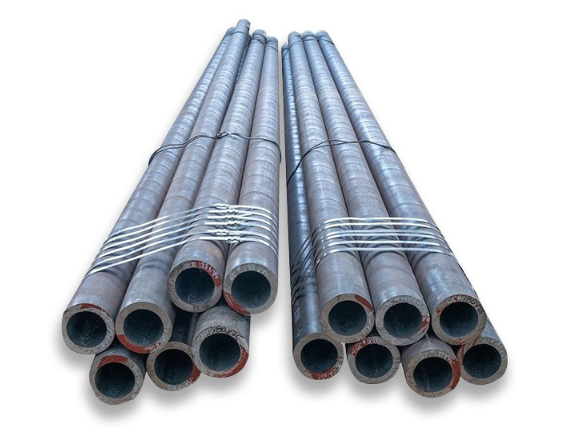
A333 Seamless & Welded Steel Pipe
Product Introduction
ASTM A333 is a standard specification covering seamless and welded steel pipe specifically designed for low-temperature service. Unlike standard carbon steel pipes which can become brittle and crack in freezing conditions, A333 pipes are manufactured with strict chemical controls and heat treatment processes to maintain toughness and ductility in sub-zero environments. This specification covers several grades, with Grade 6 being the most common for general low-temperature applications (down to -45°C) and Grade 8 (9% Nickel steel) used for cryogenic applications (down to -195°C).
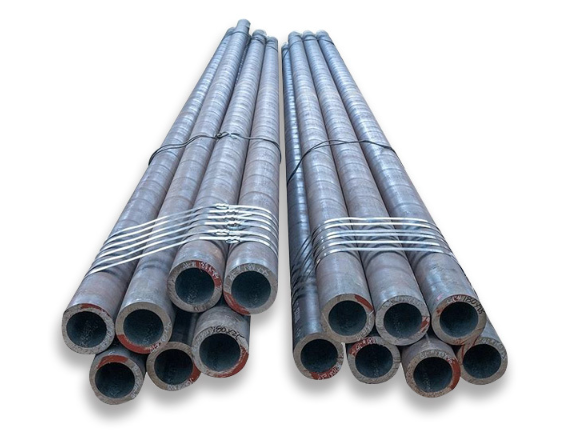
Product Features
Exceptional Low-Temperature Toughness: The defining feature of A333 is its resistance to brittle fracture. The steel is treated (often normalized) to refine the grain structure, ensuring it remains ductile even at temperatures as low as -45°C (Grade 6) or -195°C (Grade 8).
Mandatory Impact Testing: Every batch of A333 pipe must undergo Charpy V-Notch impact testing at or below the pipe's minimum design metal temperature. This ensures the material has the required energy absorption capacity to prevent catastrophic failure in cold environments.
Controlled Chemistry: The chemical composition is strictly regulated, with low Carbon and strictly limited Sulfur and Phosphorus to prevent cold shortness. Alloying elements like Nickel (Ni) are added in specific grades (e.g., Grade 3, 6, 8) to significantly enhance low-temperature properties.
Versatile Forms: Available in both Seamless (for high-pressure integrity) and Welded (ERW/SAW) configurations, allowing for cost-effective solutions across various pipeline diameters and pressure classes.
Product Applications
Liquefied Natural Gas (LNG): Essential for the transport and storage of LNG, which is maintained at cryogenic temperatures (approx. -162°C).
Refrigeration Systems: Used in large-scale industrial refrigeration units, cold storage warehouses, and food processing plants.
Petrochemical Industry: Utilized in ethylene plants, ammonia production, and gas separation units where process fluids are cooled to very low temperatures.
Cold Climate Infrastructure: Deployed in oil and gas pipelines located in arctic or sub-arctic regions where ambient temperatures drop significantly below freezing.
Cryogenic Fluid Transport: Used for handling liquid nitrogen, liquid oxygen, and other industrial gases in their liquid state.
Previous:A252 Seamless&Welded Pipe Piles
Next:A106 Grade B Steel Pipe
