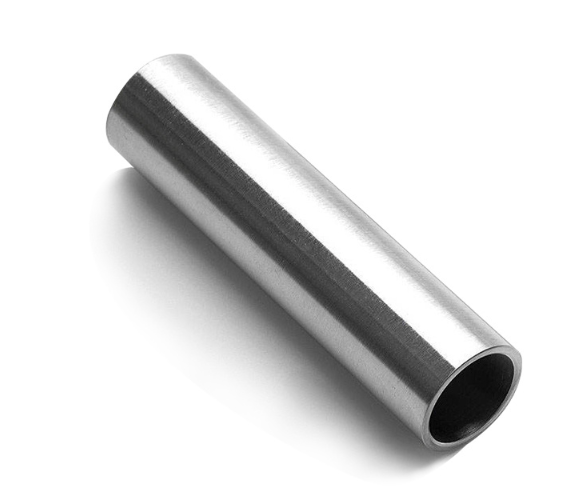
310S Stainless Steel Pipe
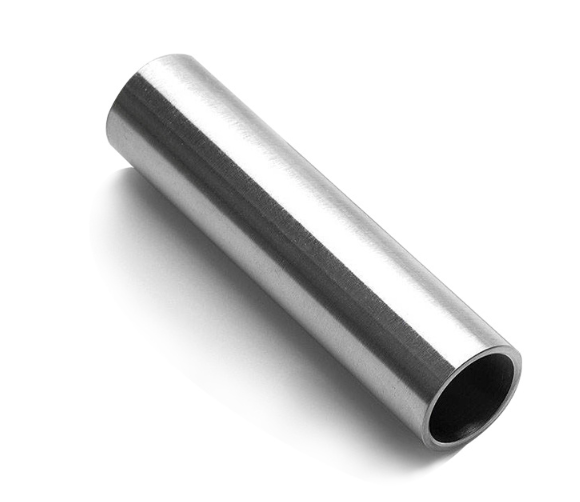
310S Stainless Steel Seamless and Welded Pipe
310S is an austenitic stainless steel grade renowned for its exceptional resistance to high-temperature oxidation and corrosion, making it one of the most widely specified heat-resistant stainless steels in industrial applications. Designated as UNS S31008 in the unified numbering system, 310S is the low-carbon variant of 310 stainless steel, with the reduced carbon content specifically engineered to minimize sensitization and improve weldability while maintaining outstanding thermal stability.
Chemical Composition and Metallurgical Design
The superior high-temperature performance of 310S stems from its carefully balanced chemical composition. The chromium content typically ranges from 24 to 26 percent, significantly higher than standard austenitic grades such as 304 or 316. This elevated chromium level promotes the formation of a stable, adherent oxide scale that protects the underlying metal from rapid oxidation at elevated temperatures. The nickel content of 19 to 22 percent stabilizes the austenitic face-centered cubic crystal structure across the entire service temperature range, preventing phase transformations that could compromise mechanical integrity or corrosion resistance. The maximum carbon content is restricted to 0.08 percent, with typical production values well below this limit. This low carbon minimizes the precipitation of chromium carbides at grain boundaries during welding or extended high-temperature exposure, thereby preserving both corrosion resistance and toughness. Additional elements including silicon, manganese, phosphorus, sulfur, and nitrogen are controlled within narrow limits to ensure consistent processing behavior and end-use performance.
Key Characteristics
The defining characteristic of 310S is its remarkable oxidation resistance in air at temperatures up to approximately 1150 degrees Celsius in continuous service and up to 1035 degrees Celsius under cyclic thermal conditions. This capability far exceeds that of conventional austenitic grades and positions 310S as the material of choice for applications where prolonged exposure to oxidizing environments is unavoidable. The grade also exhibits good resistance to thermal shock and thermal fatigue, attributed to its relatively high thermal expansion coefficient and moderate thermal conductivity. Creep strength at elevated temperatures, while inferior to nickel-based superalloys, is adequate for many intermediate-temperature structural applications.
At room temperature, 310S maintains moderate mechanical properties with minimum yield strength of 205 megapascals and tensile strength of 515 megapascals. However, unlike structural steels where room-temperature strength governs design, 310S is typically selected for applications where elevated-temperature performance and environmental resistance take precedence over ambient strength. Ductility remains excellent, with elongation exceeding 40 percent, facilitating forming operations and accommodating thermal expansion stresses.
The austenitic structure renders 310S non-magnetic in the annealed condition, a property useful in certain electrical and instrumentation applications. The steel cannot be hardened by heat treatment and is typically supplied in the solution-annealed condition to ensure maximum corrosion resistance and uniform mechanical properties.
Manufacturing and Product Forms
310S stainless steel pipe is manufactured in both seamless and welded configurations to serve diverse application requirements. Seamless pipes are produced by hot extrusion or piercing followed by rolling and sizing, yielding products with uniform wall thickness and no longitudinal weld seam. This construction is preferred for high-pressure applications, severe cyclic loading, or environments where weld integrity is difficult to inspect. Welded pipes are fabricated from coiled strip through continuous forming and autogenous or filler-metal welding processes, followed by cold drawing or sizing to achieve dimensional tolerances. For 310S, welding requires careful control of heat input and interpass temperature to avoid hot cracking, though the low carbon content mitigates sensitization concerns common to higher-carbon austenitic grades.
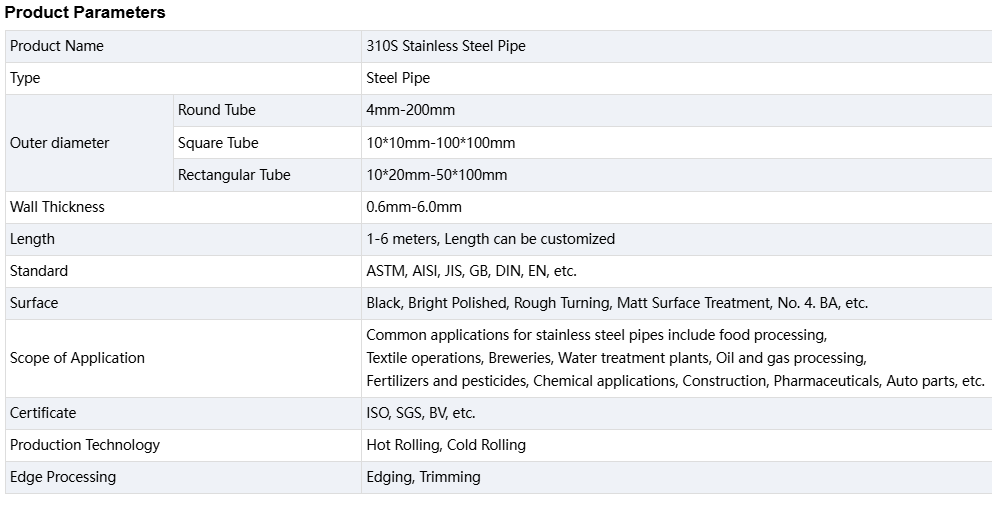
Pipe dimensions span broad ranges to accommodate engineering design flexibility. Outer diameters typically extend from small instrumentation tubing of a few millimeters to large-diameter piping exceeding 600 millimeters. Wall thicknesses vary from thin-walled heat exchanger tubing to heavy-walled pressure piping. Surface finishes range from mill scale for high-temperature structural service to bright annealed or mechanically polished surfaces for applications where cleanliness or aesthetic appearance is important.
Applications
The unique combination of high-temperature oxidation resistance and moderate strength positions 310S stainless steel pipe in critical roles across multiple industrial sectors. In petrochemical and refining operations, 310S pipes convey process fluids and gases at elevated temperatures in catalytic reforming units, steam crackers, and hydrogen production facilities. The grade resists carburization and sulfidation better than lower-alloyed stainless steels, extending service life in environments containing hydrocarbons and sulfur compounds.
Power generation applications include superheater and reheater tubing in fossil fuel boilers, particularly in regions of the steam circuit where metal temperatures approach the limits of ferritic steels. The grade also sees use in radiant tubes and muffle tubes in heat treatment furnaces, where it must withstand direct exposure to combustion atmospheres and radiant heat fluxes. In the cement and minerals processing industries, 310S pipes are employed in kiln off-gas handling, preheater systems, and clinker cooler components.
The food processing and thermal processing equipment sectors utilize 310S for conveyor systems, baking oven internals, and annealing fixtures where both hygienic requirements and thermal durability are essential. Aerospace and defense applications include exhaust system components and afterburner liners where short-duration exposure to very high temperatures is encountered.
Previous:304 Stainless Steel Pipe
Next:316 Stainless Steel Pipe
