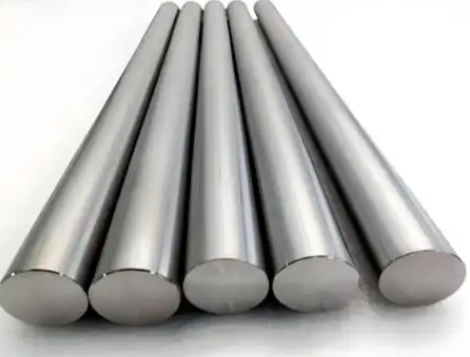
TC4 Titanium Alloy
TC4 Titanium Alloy
TC4 Titanium Alloy, internationally recognized as Ti-6Al-4V or ASTM Grade 5, is the most widely utilized α+β type titanium alloy across global industries. With its nominal composition of titanium alloyed with 6% aluminum and 4% vanadium, TC4 delivers an exceptional balance of high strength, lightweight properties, and outstanding corrosion resistance, making it the benchmark material for critical structural applications.
This alloy exhibits a tensile strength exceeding 895 MPa in the annealed condition while maintaining a density of approximately 4.43 g/cm³, roughly half that of steel. Such superior specific strength enables significant weight reduction in aerospace structures without compromising load-bearing capacity. The material demonstrates reliable long-term performance at operating temperatures up to 350°C, with short-term tolerance reaching 400°C, sufficient for most subsonic and transonic flight regimes.
Corrosion resistance represents another hallmark advantage of TC4. The alloy forms a dense, self-healing oxide film that protects against aggressive environments including seawater, chloride solutions, oxidizing acids, and industrial atmospheres. This characteristic ensures extended service life in marine subsystems, chemical processing equipment, and offshore platforms where conventional stainless steels would succumb to pitting or stress corrosion cracking.
Biocompatibility further distinguishes TC4 as the material of choice for medical implants and surgical instruments. Its non-toxic, non-magnetic nature and excellent compatibility with human bone tissue have made it the dominant alloy for orthopedic applications, including hip and knee replacements, spinal fixation devices, and dental implants.
From a manufacturing perspective, TC4 offers favorable processing characteristics. It responds well to hot forging, rolling, and extrusion operations, and can be welded using established techniques such as tungsten inert gas welding and electron beam welding, provided that proper shielding and contamination control are maintained. Machining requires attention due to titanium's low thermal conductivity and tendency to work-harden, yet modern tooling and coolant strategies enable efficient production of precision components.
The alloy's versatility spans multiple industrial sectors. In aerospace engineering, TC4 constitutes the backbone of airframe structures, engine compressor blades, landing gear components, and critical fasteners for both commercial and military aircraft. Naval architects specify this alloy for submarine hull sections, propeller shafts, and seawater piping systems where resistance to biofouling and cavitation erosion is essential. The chemical industry employs TC4 in heat exchangers, pressure vessels, and reactor internals handling corrosive process fluids. Emerging applications in high-performance automotive components, sporting equipment, and additive manufacturing continue to expand its market presence.
Available in diverse product forms including bars, plates, sheets, tubes, forgings, wires, and castings, TC4 serves both standard inventory requirements and custom-engineered solutions. Heat treatment options range from the standard annealed condition, which maximizes ductility and fracture toughness, to solution-treated and aged conditions that elevate strength levels for demanding mechanical environments.
As the Chinese national standard designation equivalent to international Ti-6Al-4V and Russian VT6 grades, TC4 ensures seamless integration into global supply chains while meeting stringent certification requirements for aerospace and medical device industries worldwide.
Previous:TC11 Titanium Alloy Bar
Next:no more
