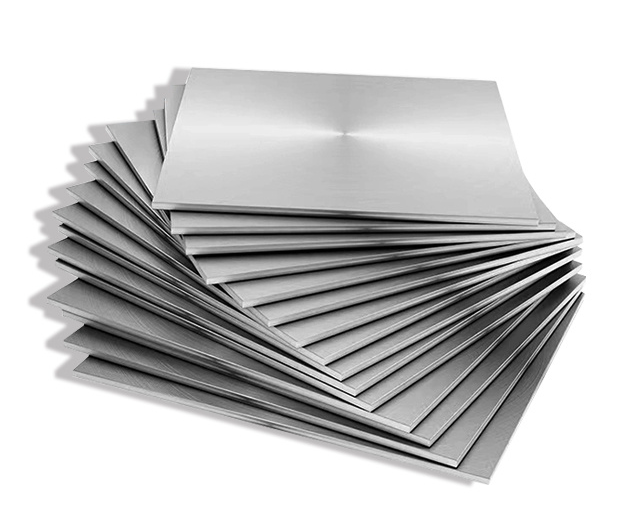
316L Stainless Steel Plate
316L Stainless Steel Plate is a low-carbon variant of the standard 316 stainless steel, offering excellent corrosion resistance, superior weldability, and high strength. It is widely used in industries where exposure to corrosive environments and welding are common.
Key Features:
Low Carbon Content: The "L" stands for "Low Carbon" (maximum 0.03%), which minimizes carbide precipitation during welding. This reduces the risk of intergranular corrosion in the heat-affected zone, making 316L ideal for welded components that cannot be annealed after fabrication.
Excellent Corrosion Resistance: Contains 2–3% molybdenum, providing superior resistance to pitting and crevice corrosion, especially in chloride-rich environments like seawater, chemical processing plants, and coastal areas.
High Strength & Durability: Maintains good mechanical properties at both high and cryogenic temperatures, suitable for a wide range of applications.
Superior Weldability: Can be easily welded using common techniques without compromising corrosion resistance, making it ideal for fabricated structures.
Versatile Formability: Can be cut, bent, and formed using standard fabrication methods, allowing for complex shapes and designs.
Common Applications:
Chemical & Petrochemical Processing: Storage tanks, reactors, pipes, and heat exchangers handling corrosive chemicals.
Marine Industry: Boat hulls, offshore platforms, seawater desalination equipment, and marine hardware.
Food & Beverage: Processing equipment, storage tanks, and piping systems requiring high hygiene standards and corrosion resistance.
Pharmaceutical & Medical: Sterilization equipment, surgical instruments, and cleanroom components where weld integrity is critical.
Architecture & Construction: Exterior cladding, handrails, and structural components in coastal or high-pollution areas.
Power Generation: Components in nuclear and thermal power plants exposed to high temperatures and corrosive environments.
Available Forms & Finishes:
316L stainless steel plates are available in various thicknesses, widths, and surface finishes, including:
2B Finish: A smooth, moderately reflective finish suitable for industrial applications.
No. 4 Finish: A brushed or satin finish commonly used in architectural and food processing applications.
BA (Bright Annealed) Finish: A highly reflective, mirror-like finish for decorative or high-cleanliness uses.
No. 8 (Mirror) Finish: A highly polished, reflective finish for decorative purposes.
Advantages Over 316:
Improved Weldability: Lower carbon content reduces the risk of carbide precipitation during welding, eliminating the need for post-weld annealing in most cases.
Better Corrosion Resistance in Welded Areas: Maintains corrosion resistance in the heat-affected zone, making it suitable for welded assemblies.
In summary, 316L Stainless Steel Plate combines the corrosion resistance of 316 with improved weldability, making it an ideal choice for applications requiring welded components in corrosive environments. Its versatility, durability, and ease of fabrication make it a preferred material across multiple industries.
Previous:304 Stainless Steel Plate
Next:321 Stainless Steel Plate
