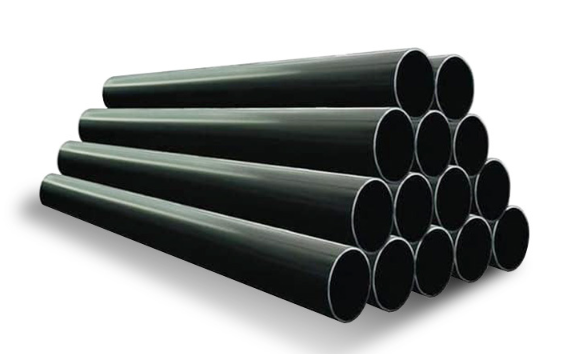
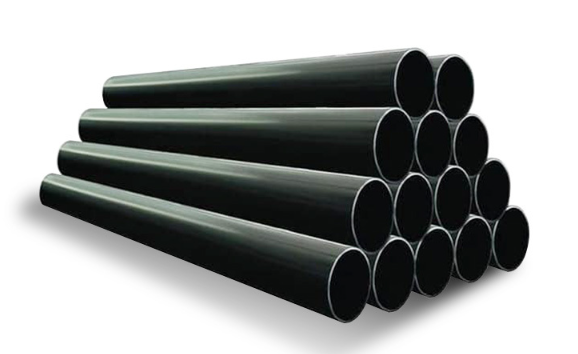
Resistance Welded Pipe ERW
Product Introduction: Resistance Welded Pipe (ERW)
The Electric Resistance Welded (ERW) Pipe is a type of welded steel pipe manufactured through a process where the edges of the steel strip or coil are heated by the resistance to electric current and then forced together to form a solid-state bond. This method produces a longitudinal weld seam that is integral to the pipe's structure, resulting in a product that combines high strength with cost-effectiveness.
As one of the most widely used piping solutions globally, ERW pipe serves as a versatile alternative to seamless pipe for applications where extremely high pressure is not the primary concern, offering excellent dimensional accuracy and a smooth surface finish.
Manufacturing Process
The production of ERW pipe begins with the uncoiling of a continuous steel strip. The strip is then passed through a series of rollers that progressively form it into a tubular shape. The edges of this newly formed tube are brought together, and high-frequency alternating current is passed through them. The electrical resistance at the contact point generates intense localized heat, softening the metal without melting it. Immediately following this heating phase, the edges are squeezed together under high pressure by squeeze rolls. This pressure forges the two edges into a single, homogeneous piece of metal, creating a strong, forge-welded seam. Finally, the pipe is cooled, sized, cut to length, and often subjected to non-destructive testing to ensure weld integrity.
Key Characteristics & Advantages
The ERW process imparts several distinct advantages to the finished pipe. Firstly, the weld integrity is exceptionally high because the welding occurs in a solid state rather than a molten state, preventing issues like slag inclusions or porosity that can occur in fusion welding. Secondly, ERW pipes exhibit excellent dimensional tolerances and consistent wall thickness, making them easy to thread, couple, and install. Thirdly, they possess a smooth internal surface, which minimizes friction loss in fluid transport applications. Lastly, ERW pipes are highly cost-effective to produce, making them an economically attractive option for large-scale projects compared to seamless or submerged arc welded pipes.
Technical Standards & Grades
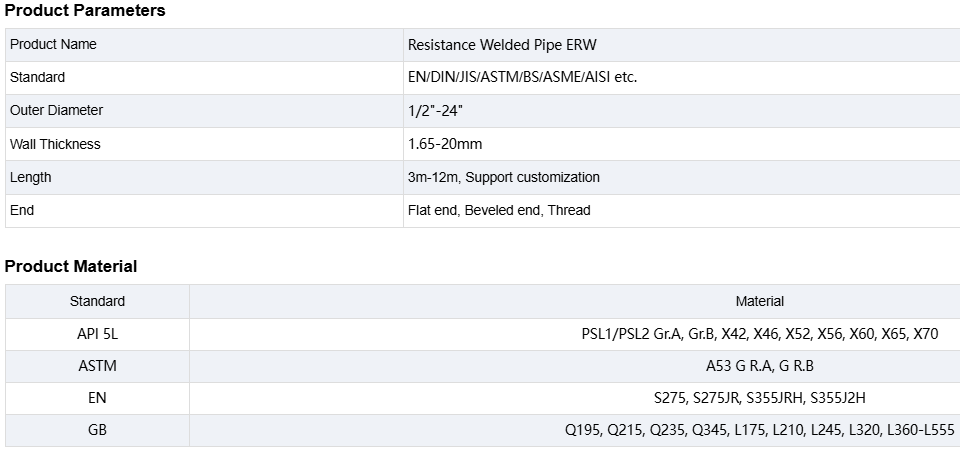
ERW pipes are manufactured in accordance with various international standards to suit different industrial needs. The most common specifications include ASTM A53 (Standard Specification for Pipe, Steel, Black and Hot-Dipped, Zinc-Coated, Welded and Seamless) and ASTM A500 (Standard Specification for Cold-Formed Welded and Seamless Carbon Steel Structural Tubing). For line pipe applications, API 5L (Specification for Line Pipe) is frequently referenced. Steel grades typically range from the mild strength of Grade B to higher-strength variants such as X42, X52, and X70, depending on the required yield strength and tensile properties for the intended service environment.
Primary Applications
Due to their versatility and reliable performance, ERW pipes are utilized across a broad spectrum of industries. They are extensively used in the construction sector for structural columns, scaffolding, and fencing. In the energy sector, they serve as flow lines for oil and gas gathering systems and are used in the casing and tubing of water wells. For infrastructure and utilities, ERW pipes are a staple for water transmission and distribution networks, fire protection systems, and electrical conduit. Additionally, they find applications in automotive manufacturing for drive shafts and exhaust systems, as well as in general mechanical tubing where precise dimensions are required.
Conclusion
The Electric Resistance Welded (ERW) Pipe represents an optimal balance of structural integrity, manufacturing efficiency, and economic value. Its solid-phase welding technique ensures a dependable and homogenous bond, while adherence to rigorous international standards guarantees performance and safety. Whether for structural support, fluid conveyance, or mechanical fabrication, ERW pipe continues to be a foundational material in global industrial development.
Previous:Galvanized Steel Pipe
Next:no more
